You are sitting at the Highway 31 crossing, engine idling, watching a string of container cars that has apparently decided to park there for a while. This happens often enough in Flomaton that most people do not check the time or curse under their breath. They just wait, because they already know the wait usually means something interesting is about to happen a few hundred yards up the track: two trains are about to pass each other, or one is about to peel off toward Pensacola while the other keeps rolling north.
What most people driving that crossing do not know is why. The answer is not maintenance, and it is not a broken signal. It is a piece of railroad geometry that is more than a century old and is still, today, doing exactly the job it was built to do.
A Welcome Center Sitting on the Actual Junction
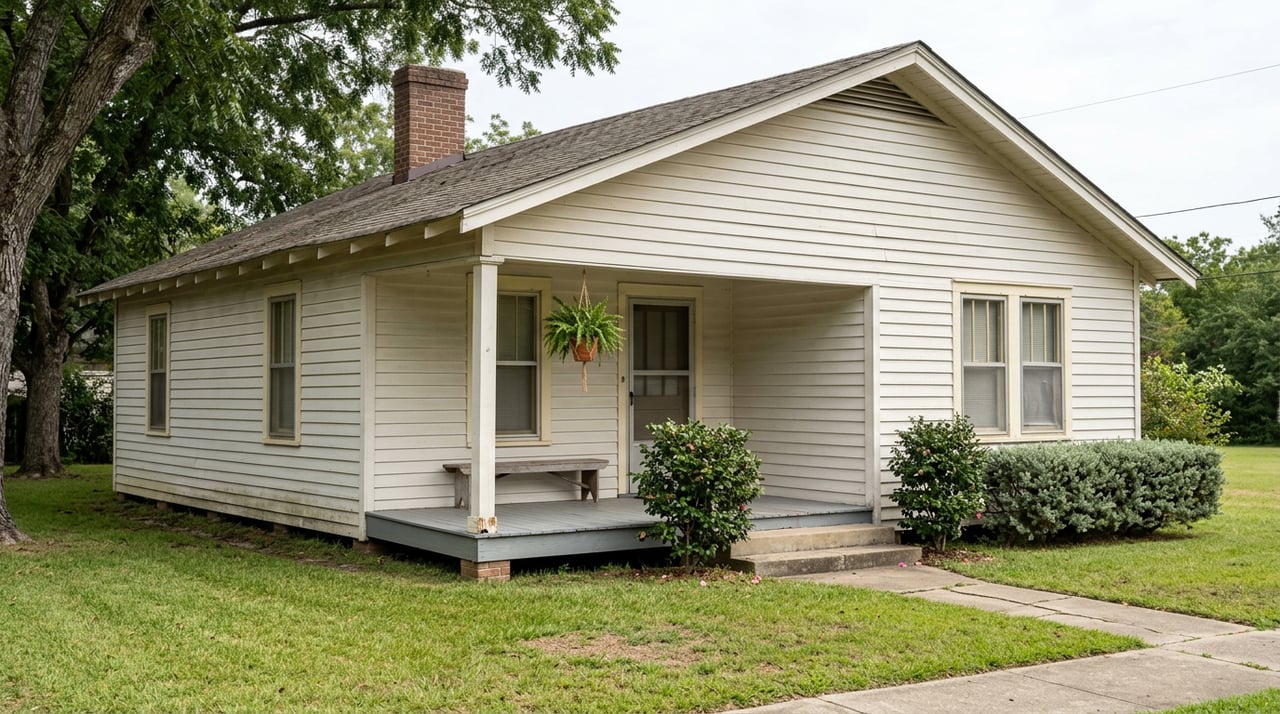
Flomaton's welcome center is also a railroad museum, and that pairing is not a coincidence or a cute branding choice. The Flomaton Area Railroad Museum tells the story of the town's origin as a railway junction, and it does so from inside a nineteenth-century home on Sidney Manning Boulevard, a street named for a World War I Medal of Honor recipient whose monument still stands out front. Step onto the grounds and you will find a retired Seaboard Coast Line caboose parked alongside other railroad artifacts, the kind of hardware that used to ride at the back of every freight train before technology made the caboose unnecessary.
The reason any of this exists here, rather than in some other small Alabama town, comes down to track geometry. Flomaton was the point where the Louisville and Nashville Railroad's Birmingham-to-New Orleans mainline crossed its Selma-to-Pensacola secondary line. That crossing is a wye, a triangular junction that lets trains switch from one route to another without having to back up or run around. Both of those original L&N routes are still active today, now operated by CSX Transportation.
That last detail is the one worth sitting with. This is not a preserved junction. It is a working one.
The Track Still Has a Job
Railfans who track CSX operations list Flomaton as a live junction point on the Atlanta Division, where the M&M Subdivision and the PD/PA Subdivision meet. One line runs the old Birmingham-to-New Orleans route through town. The other splits toward Pensacola, still carrying the kind of container and manifest freight that used to ride behind steam power and now rides behind diesel.
The wait you feel at the crossing traces back to a specific operational quirk. West of Flomaton, the line runs under Centralized Traffic Control, meaning a dispatcher can remotely line switches and signals in real time. East of town, it switches to Direct Traffic Control, a slower, block-by-block method of authorizing train movements. That handoff happens right at Flomaton, and it is dispatched out of Jacksonville, Florida, hundreds of miles away. Because the line through town is single track, trains frequently have to hold here so the dispatcher can keep everything moving without a head-on meet. You are not stuck behind a broken train. You are stuck behind a scheduling decision being made by someone in another state, on a piece of track that has forced exactly this kind of patience since before your grandparents were born.
It helps to know this stretch of railroad was not always about container boxes and coal. For decades, two named passenger trains rode through Flomaton on the same north-south route that still carries freight today:
- The Humming Bird, an L&N name passenger train
- The Pan-American, another L&N name train that ran the same north-south route
Neither runs anymore, but the rails they used are the same ones creating your wait at Highway 31 this week.
Why the Whistle Pattern Changes Depending on Which Way You're Facing
If you live close enough to town to hear trains at night, you may have noticed the horn pattern is not identical every time. Some nights it is a longer sequence that fades north. Other nights it cuts off sharply, followed by a second, quieter horn a few minutes later heading a different direction. That is not your imagination. It is two different subdivisions doing two different jobs, one continuing straight through on the old L&N mainline, the other taking the leg of the wye toward Pensacola. A container train bound for the coast physically takes a different piece of track than a train continuing north toward Montgomery, and the horn sequence for a road crossing depends on which leg it is using.
None of this is signage you will find posted anywhere in town. It comes from the same railfan community that documents junctions like this one across the Southeast, cross-referenced against the L&N's own operating history. Flomaton shows up in those records not as a quaint stop but as a genuinely important piece of railroad plumbing, the kind of place operating engineers still have to think carefully about even now.
A Reason to Actually Stop at the Museum
Most people who live here have driven past the railroad museum dozens of times without pulling in. That is understandable. It looks like a nice old house with a caboose next to it, and if you already know it is a welcome center, you assume it is built for visitors passing through on their way to the beach, not for you.
But the exhibits inside are telling the story of the ground under your own commute. The reason your evening drive sometimes includes five extra minutes at a dead stop is the same reason this building exists at all. Understanding the wye does not make the wait shorter, but it does make it make sense, and there is something satisfying about knowing the specific mechanical reason behind a piece of your daily routine instead of just shrugging it off as small-town inconvenience.
If you have out-of-town family visiting, or kids who like trains, or you are simply curious what a hundred-year-old junction looks like up close, the caboose and the artifacts on the museum grounds are a genuinely good stop, and a rare case of a small town's welcome center actually explaining something true and specific about the place instead of just listing attractions.
The next time you are sitting at that crossing, watching a train hold for a meet that is being coordinated from a dispatch desk in Jacksonville, you will know exactly what is happening and why Flomaton, of all places, is where it happens.
For more on the neighborhoods and towns across South Alabama and Northwest Florida that our team knows from the ground up, reach out to PHD Realty. Whether you are curious about a specific street, a piece of land, or just want to talk shop about the place you already call home, we are happy to talk.